

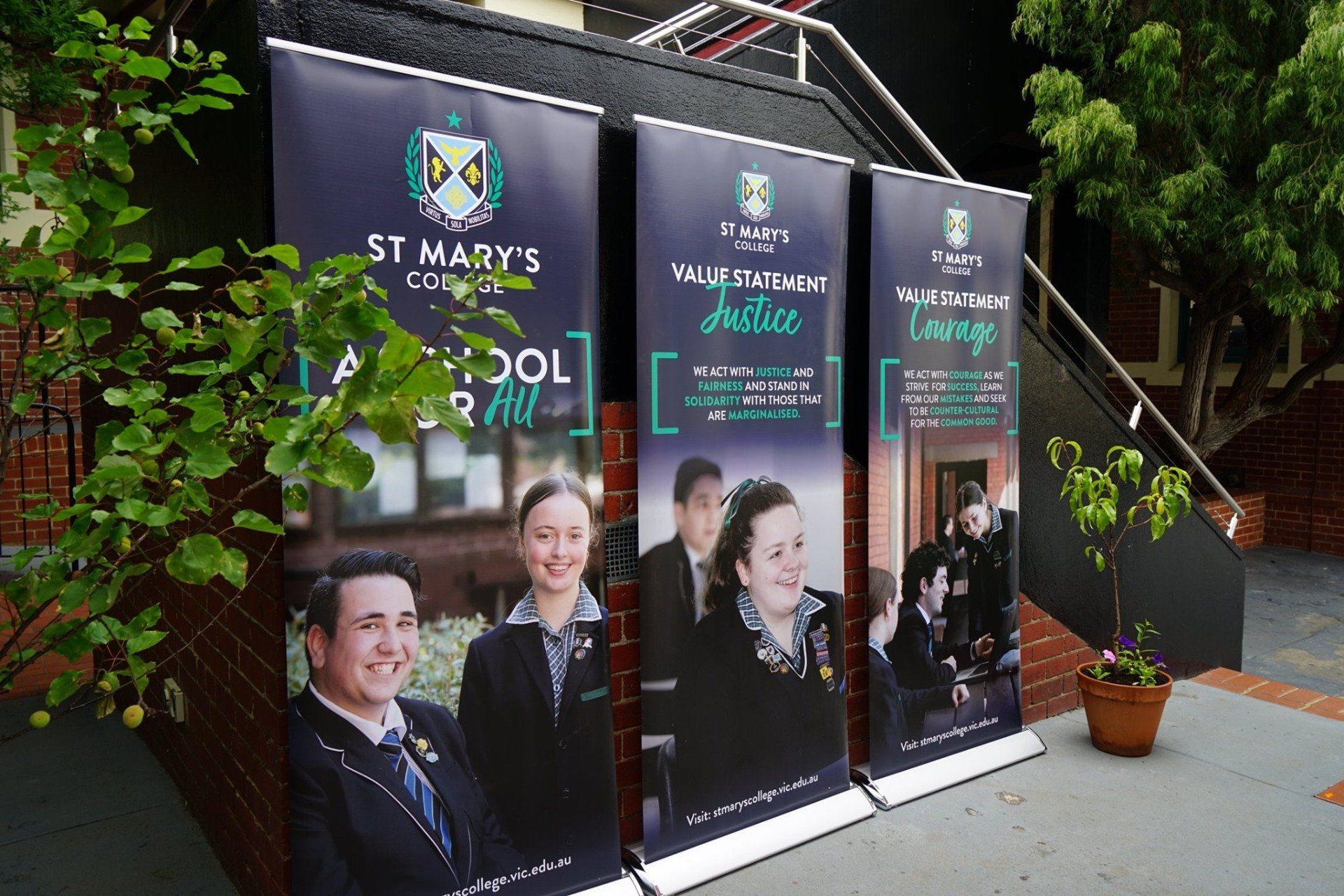
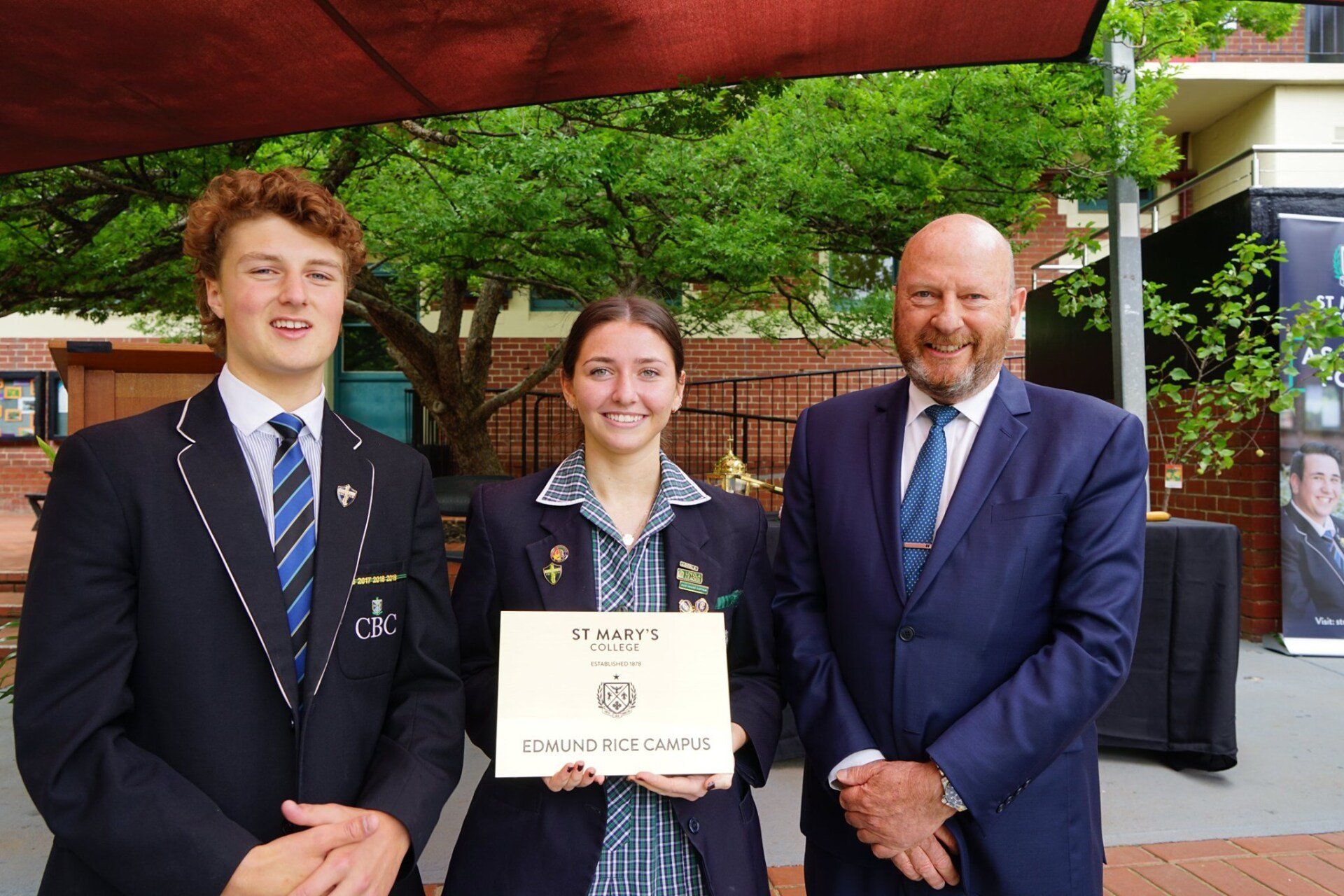
Christian Brothers College (CBC), located in St Kilda, is stepping into a reimagined future. After 142-years of rich history as an all–boys school, it will open the doors this week as a coeducational school and be renamed St Mary’s College.
This significant step in the school’s history has been spurred on by the growing demand in the inner South East of Melbourne for co-educational schools, alongside the opportunity that presented itself with the closure of sister school, Presentation College.
St Mary’s College will continue to foster a strong community where everyone knows one another. The four touchstones of (1) inclusive community, (2) liberating education, (3) social justice and (4) gospel spirituality will continue to be the heartbeat of the school. Students from different backgrounds and life experiences will always be embraced.
To support the college in their new chapter, Catholic Development Fund (CDF) provided a loan for a much needed and impressive school renovation. Andrew O’Brien, college business manager, says “the presentation of the campus is very important in living out the deep values that the school stands for and this renovation, gave us space for greater connections.”
The upgrade included a multi-purpose room, air-conditioning throughout the building, a student plaza, classrooms and a very special space dedicated to teachers. The renovation of the staffroom was particularly important to the school to show staff appreciation for their leadership.
Andrew says, “we wanted to give back to teachers because they go through a lot. Staff work hard so we wanted to show them our support through this renovation by giving them modern amenities and a nice environment to walk into each day.”
Classrooms were redesigned, so they became modernised, yet at the same time the paid homage to the history of college. The most impressive aspect of the school upgrade is the student plaza. An area that was once dark and dingy has now been transformed into a lively, bright and light space. This versatile and flexible area acts not only as an assembly area but has multi-purpose rooms, a commercial grade kitchen, tuck shop and is adaptable for community group use.
CDF has had a long-standing relationship with CBC and now looks forward to the future with St Mary’s College. Andrew O’Brien says, “CDF has gone above and beyond in giving us guidance, advice and support. Personally, in my professional career, working with CDF has been one of my best experiences.”
“There is no doubt that the school has greatly benefited and transformed from the refurbishment. We are a school not just about numbers but about our community, and the school upgrade and re-enlivened learning spaces reflect this ideal. CDF has been our key partner in achieving our redevelopment goals. Being a Catholic organisation, they understand our Catholic ethos and values”, he says.
Share this article:
Related articles


CDPF Limited, a company established by the Australian Catholic Bishops Conference, has indemnified the Catholic Development Fund ABN 15 274 943 760 (the Fund) against any liability arising out of a claim by investors in the Fund. In practice, this means your investment is backed by the assets of the Catholic Archdiocese of Melbourne. The Fund is required by law to make the following disclosure. Investment in the Fund is only intended to attract investors whose primary purpose for making their investment is to support the charitable purposes of the Fund. Investors’ funds will be used to generate a return to the Fund that will be applied to further the charitable works of the Archdiocese of Melbourne and the Dioceses of Sale and Bunbury. The Fund is not prudentially supervised by the Australian Prudential Regulation Authority nor has it been examined or approved by the Australian Securities and Investments Commission (ASIC). An investor in the Fund will not receive the benefit of the financial claims scheme or the depositor protection provisions in the Banking Act 1959 (Cth). The investments that the Fund offers are not subject to the usual protections for investors under the Corporations Act (Cth) or regulation by ASIC. Investors may be unable to get some or all of their money back when the investor expects or at all and investments in the Fund are not comparable to investments with banks, finance companies or fund managers. The Fund’s identification statement may be viewed here or by contacting the Fund. The Fund does not hold an Australian Financial Services Licence.